Metallic movement, flake density, quartz texture, color and sheen.
Epoxy, polyaspartic, polyurea and more
Choose the visible finish. Then choose the system that can support it.
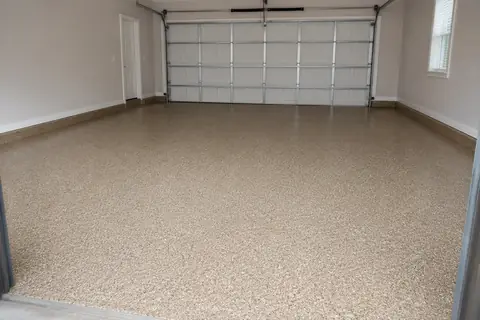
Full-flake, metallic, quartz and solid color describe what you see. Epoxy, polyaspartic, polyurea and polyurethane describe materials that may serve different jobs below or above that finish.
Primer, build or binder layer, decorative field and protective finish.
Soundness, old products, moisture, defects, joints and installation conditions.
Six material routes
What each coating material can do—and where it needs caution.
These are comparison families, not promises that every product or combination is available. A live proposal should name the approved manufacturer system and current data for every layer.
Epoxy primer, build coat or decorative binder
Two-component epoxy can provide adhesion, body, color and working time for metallic pigment or broadcast media.
Useful when
A high-build, repair-tolerant or decorative layer is needed and the slab plus installation window fit the selected product.
Tradeoffs
Conventional epoxy can amber under UV; cure and vehicle return may be slower; moisture and hot-tire resistance are product-specific.
Polyaspartic finish or complete system
Aliphatic polyaspartic products are often selected for faster cure, color stability and protective finish performance.
Useful when
Return-to-use timing or sunlight at the garage door matters and the crew can control a shorter working window.
Tradeoffs
Fast cure reduces application margin, especially on a warm North Texas slab. Pinholes, lap lines or trapped defects remain possible when conditions are wrong.
Polyurea base or fast-cure system
Polyurea is a broad chemistry family. Garage products may be used as flexible fast-cure bases, binders or complete systems.
Useful when
The named product's flexibility, cure, bond and exposure data fit the project and installers are trained for its working time.
Tradeoffs
The word “polyurea” does not prove UV stability, moisture tolerance or hot-tire performance. Exact formulation and complete cure still control.
Polyurethane / urethane protective topcoat
A compatible aliphatic polyurethane can protect an epoxy color, metallic field or broadcast floor.
Useful when
Abrasion, chemical exposure, gloss control or color stability is a priority and a compatible slower-cure finish fits the schedule.
Tradeoffs
It does not repair a weak base layer; intercoat preparation, recoat timing and vehicle cure must be documented.
Moisture-mitigation epoxy primer
Some manufacturer systems use specialized epoxy primers to manage measured slab moisture within published limits.
Useful when
Testing identifies a condition addressed by an approved mitigation assembly and there is no unresolved liquid-water source.
Tradeoffs
It is not a universal waterproofing claim. Testing, coverage, preparation and overcoat compatibility become critical scope items.
Clear sealer or polished-concrete alternative
Penetrating sealers, film-forming clear coats and mechanically polished concrete keep a more natural mineral appearance.
Useful when
The owner prefers the existing concrete rather than a metallic, flake or solid-color resin surface.
Tradeoffs
Stain hiding, crack appearance, slip behavior, dust control and maintenance differ by route; polishing is a separate mechanical service to confirm.
Eight visible finish directions
The same chemistry can support very different-looking garages.
Finish choice affects visual wear, touch-up visibility, texture and cleaning. It does not by itself identify the primer, binder or topcoat.
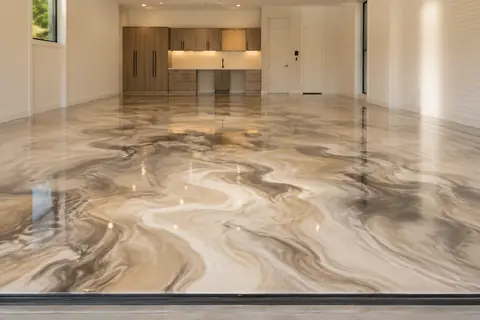
Showpiece finish
Metallic marble
A flowing, one-of-a-kind pattern with dramatic depth for homeowners who want the garage to feel designed—not merely coated.
Request this direction →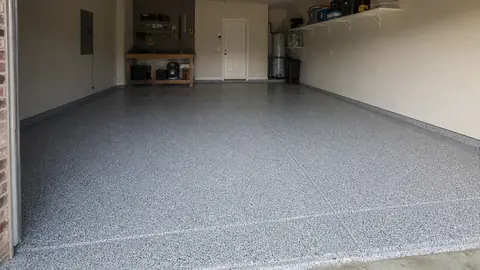
Everyday favorite
Full-flake
A practical decorative field with broad chip coverage, visual texture and many neutral, dark or bold blend directions.
Request this direction →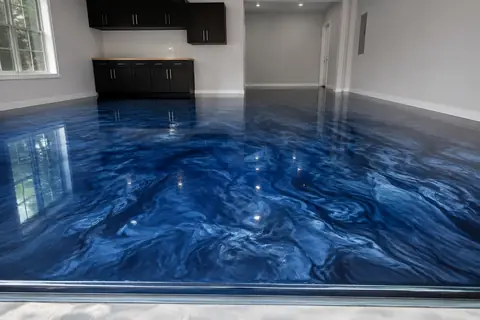
Bold color direction
Deep blue metallic
A saturated custom look for a garage, home gym or workshop where color is part of the finished room.
Request this direction →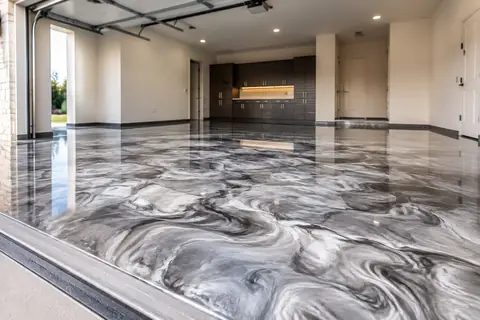
Cool showpiece finish
Silver metallic
A cooler marble-like direction with flowing pigment variation; later scratches and touch-ups can remain more visible than on a busy flake field.
Request this direction →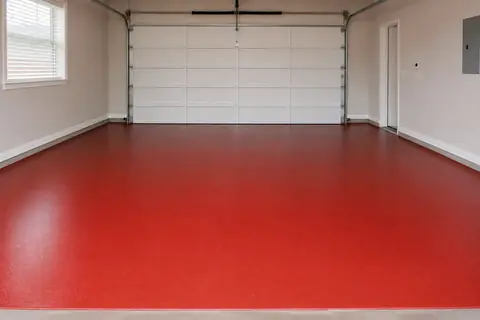
Solid-color finish
Performance red
A uniform saturated color for a bold workshop or collector garage. Even coverage and substrate repair quality stay easy to see.
Request this direction →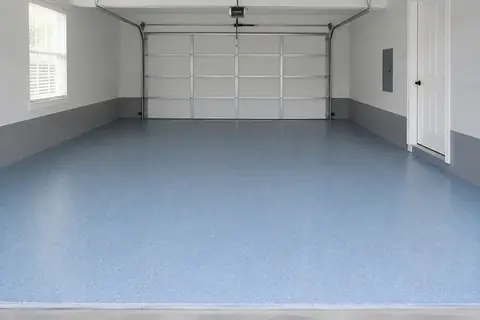
Bright color finish
Sky blue
A lighter, cleaner-looking solid field for a garage, hobby room or home gym, with texture selected around wet use and cleaning.
Request this direction →
Mineral aggregate
Quartz broadcast
A dense small-grain broadcast with a different texture and visual scale than vinyl flake; approved products and topcoat build must be confirmed.
Request this direction →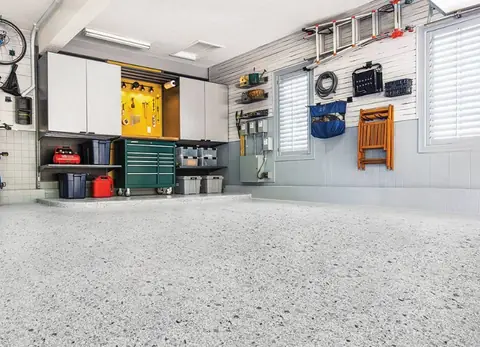
Lighter broadcast
Partial flake
A deliberate scattered-chip look that leaves more base color visible and requires consistent distribution from edge to edge.
Request this direction →Fast comparison
Start with the goal, then test the tradeoff.
Product names and real samples belong in the estimate. These categories help a homeowner ask a better first question.
| Direction | Often selected for | Question to settle |
|---|---|---|
| Full-flake | Busy decorative texture and everyday visual forgiveness | Broadcast density, scrape profile, topcoat build and cleanability |
| Partial flake | More visible base color with scattered chips | Distribution consistency and repair visibility |
| Metallic epoxy | Unique flowing showpiece appearance | Installer-controlled pattern, later scratches and UV exposure |
| Solid color | Simple uniform field | Substrate and roller variation remain easier to see |
| Quartz broadcast | Small-grain mineral texture | Aggregate system, texture, sealing and approved service capability |
| Natural sealer | Concrete appearance with reduced dust or staining goals | Film build, breathability, stain limits and maintenance |
One compatible assembly
The system is only as reliable as its interfaces.
A useful proposal names the concrete profile, repair products, primer or binder, decorative media, topcoat and cure window. A stronger top layer cannot rescue weak concrete or an incompatible coat below it.
- Identify retained and removed materials.
- Match preparation to the named products.
- Control temperature, humidity, dew point and pot life.
- Give separate foot and vehicle return times.
Compatible topcoatWear, color stability, chemical exposure, sheen and texture selected for actual garage use
Decorative broadcast or finishSpecified coverage and texture—never a substitute for preparation or repairs
Primer / binder / baseExact product chemistry, coverage, mix ratio and recoat window documented as one assembly
Prepared concrete profile + repairsSound, clean surface with defects classified and treated by compatible methods
Movement-joint detailDo not erase expected slab movement with a rigid decorative layer.
Existing concrete slabSoundness, moisture condition, past sealers/coatings and exposure evaluated first
Educational cross-section only. The selected manufacturer's data sheets and the condition of the actual slab control the final sequence, thickness, preparation and cure.
Coating system FAQ
Six questions before choosing a chemistry label.
Is polyaspartic always better than epoxy in a Texas garage?
No. Polyaspartic products can offer fast cure and improved color stability, while epoxy can provide working time, build and decorative versatility. The substrate, application window, layer compatibility, use and exact product data determine the better assembly.
What is the difference between polyurea and polyaspartic?
Polyaspartic coatings are a type of aliphatic polyurea, but contractor labels are often used loosely. Ask for the exact product names, data sheets, layer roles and cure limits rather than choosing from a category word alone.
Can epoxy be used under a polyaspartic topcoat?
Many published systems combine an epoxy primer or build coat with a compatible polyaspartic finish. Compatibility, recoat window, surface preparation and coverage must come from the approved system—not from mixing unrelated products.
What does a polyurethane topcoat add?
A compatible aliphatic polyurethane can be selected for color stability, abrasion, chemical exposure, gloss and texture. It normally cures more slowly than very fast polyaspartic products and still depends on the layers beneath it.
Is a clear sealer the same as an epoxy floor?
No. Penetrating and film-forming sealers leave a different build, look and maintenance profile. They may suit owners who want natural concrete, but they do not create a full-flake or high-build metallic floor.
Which system is best for hot tires?
There is no chemistry-only answer. Garage-rated product suitability, preparation, contamination, moisture, full cure and vehicle-return timing all matter. Compare the complete written assembly and the manufacturer's current data.
Slab-first estimate
Compare complete systems—not just category names.
Send the current floor, garage use, desired finish, ZIP code and schedule. The live proposal should identify every approved layer and the conditions that control it.