Existing coatings, sealers, oil, repairs, cracks and joints.
Decorative epoxy garage floors in Dallas–Fort Worth
Turn the garage into a finished part of your home.
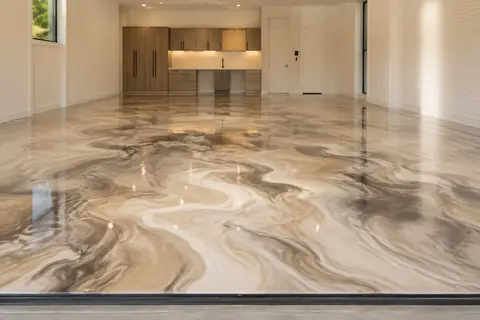
Choose a full-flake, metallic, quartz or solid-color look for a cleaner, brighter garage—then build that finish on preparation and compatible layers planned for the concrete beneath it.
- Beautiful custom finishes
- Preparation included in the plan
- Clear return-to-use guidance
Base, broadcast, texture and topcoat selected as one compatible assembly.
Verified cure timing, care guidance and clear scope before the floor returns to service.
Interactive garage floor designer
Build a floor direction in four quick choices.
Start with the garage you have, then compare appearance and system routes. This is a visual planning tool—not a price quote or product specification.
Generated previews illustrate design directions. They are not completed company projects, exact color samples, prices or a substitute for inspecting the slab and matching approved products.
Start with what the floor is doing
Six visible failures before sixteen diagnostic paths.
The problem section now works like the reference site: real symptom imagery first, then a complete searchable directory. Similar-looking defects still need evidence before the cause or repair is named.
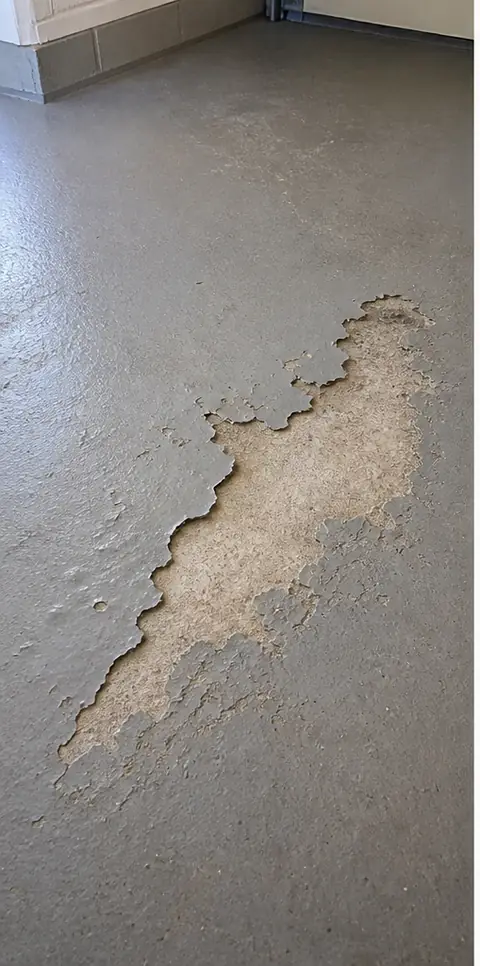
Bond failure
Peeling or flaking coating
Find the failed layer and test beyond the visible loose edge before choosing a patch or broad removal.
Open diagnosis →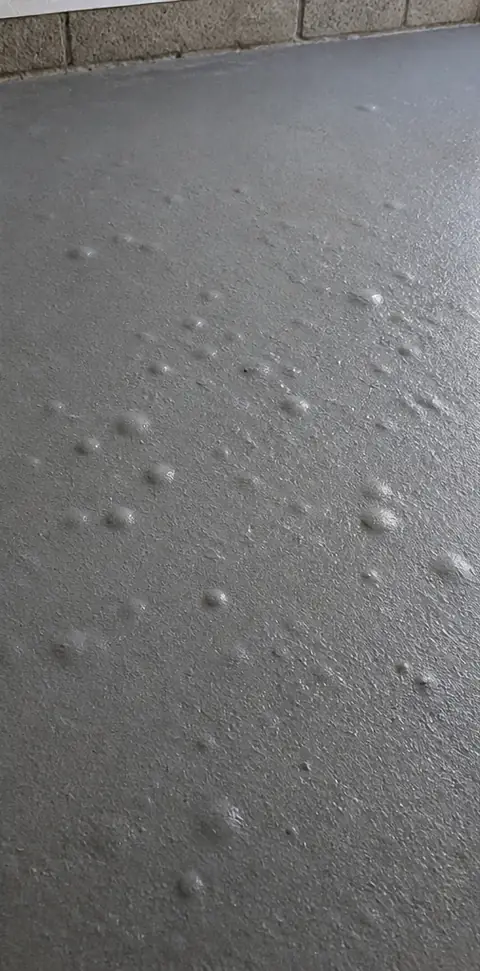
Raised defects
Bubbles and blisters
Trapped air, outgassing, vapor, intercoat conditions and application timing can create similar-looking raised areas.
Open diagnosis →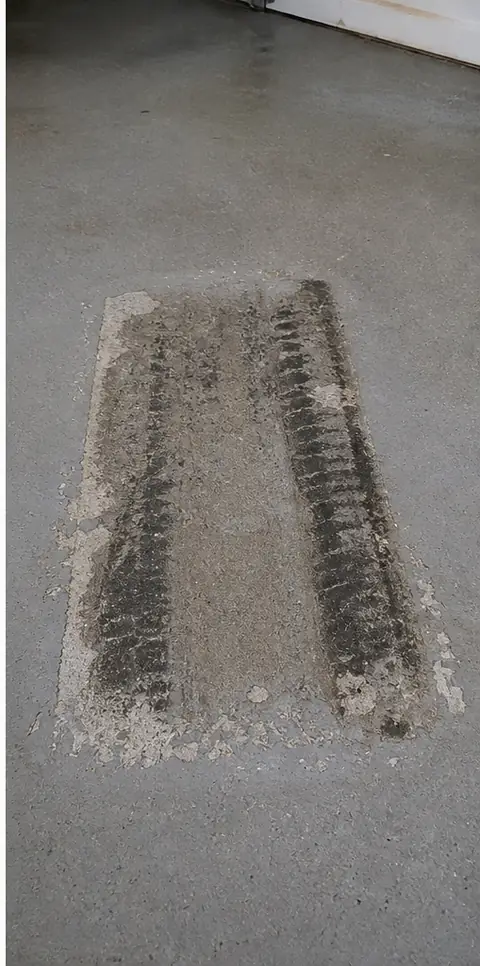
Parking-zone failure
Hot-tire pickup
The tire pattern points to bond, cure, contamination and system suitability questions—not one automatic cause.
Open diagnosis →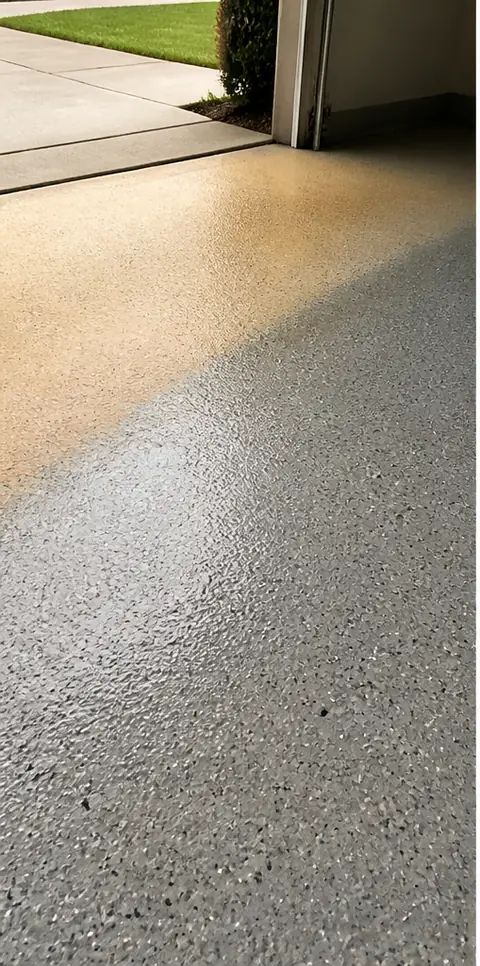
Door-side exposure
Yellowing or fading
Compare sunlight and heat exposure with the exact resin, pigments and compatible topcoat rather than the category name alone.
Open diagnosis →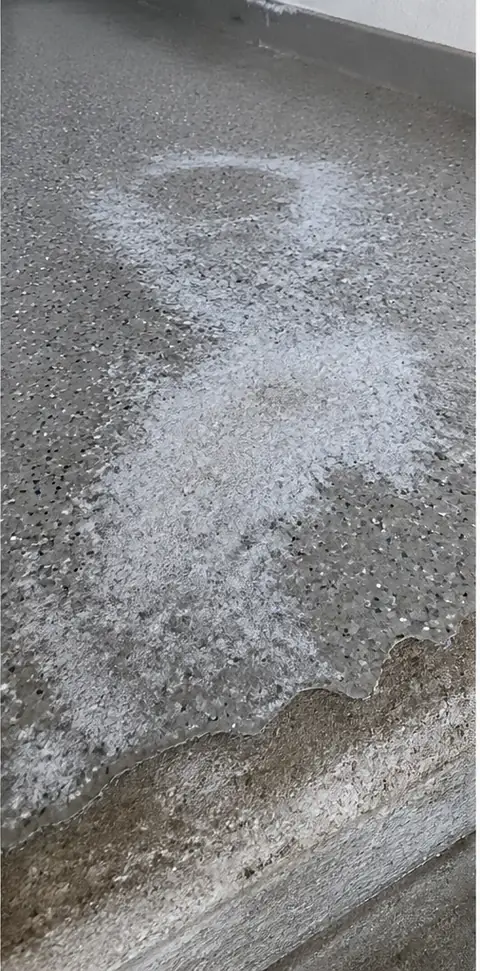
Slab symptom
Moisture or efflorescence
Locate the water source and document the slab condition before deciding whether testing, mitigation or no coating is appropriate.
Open diagnosis →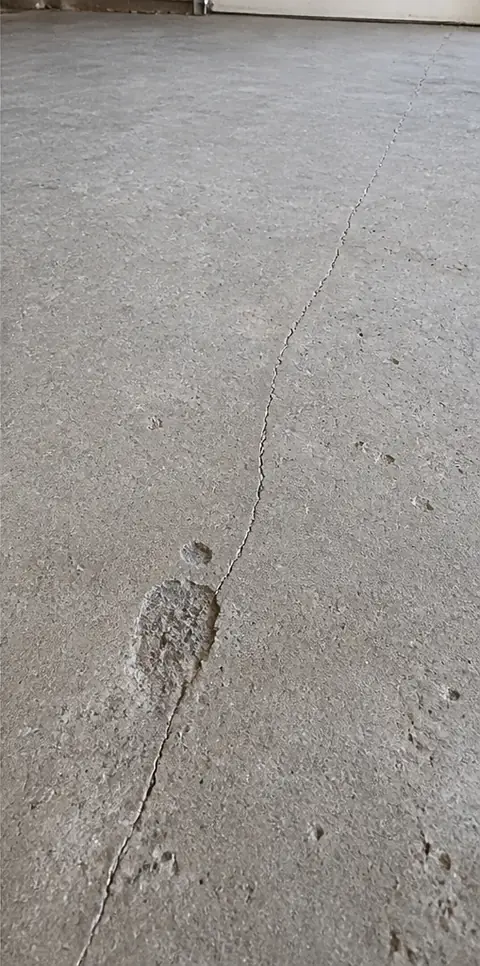
Concrete damage
Cracks, pits and spalls
Static defects, movement joints, weak concrete and structural symptoms require different repair boundaries.
Open diagnosis →Problem finder
Sixteen symptom-led paths—the page meets the problem before it sells the finish.
Oil stains before coating
Determine whether contamination remains within the concrete.
Open diagnosis →Fisheyes or craters
Look for silicone, oil, surfactant or surface-tension contamination.
Included in assessmentUneven flake coverage
Check broadcast timing, density, batch transitions and scrape pattern.
Open diagnosis →Roller marks or lap lines
Review working time, temperature, coverage and wet-edge control.
Included in assessmentCloudy or milky topcoat
Separate trapped moisture, blush, cure conditions and cleaning residue.
Included in assessmentLifting at edges or joints
Inspect termination, water entry, movement and preparation at boundaries.
Included in assessmentSoft or tacky coating
Verify mix ratio, induction, cure temperature, age and chemical exposure.
Open diagnosis →Service catalog
Ten distinct scopes—not four vague coating names.
Consumer terms overlap. Each service page identifies the preparation, layer sequence, appearance, alternatives and cure questions that belong to that specific search intent.
Core service
Epoxy garage floor coatings
Turn exposed concrete into a finished part of the home with color, depth and a system selected for the slab beneath it.
Explore epoxy floors →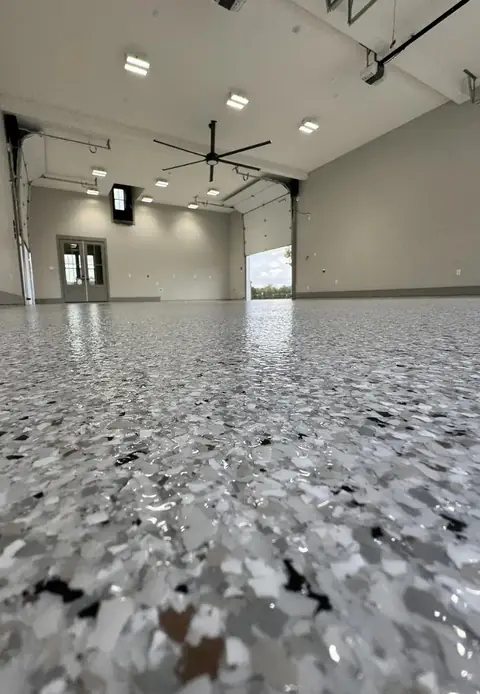
New service exemplar
Full-flake garage floors
A dense decorative broadcast can create broad visual coverage and adjustable texture when it is built over a verified substrate.
Open full-flake guide →
Fast-cure comparison
Polyaspartic coating systems
Fast-working materials may fit topcoats or full systems, but working time, heat, moisture and preparation still control the installation.
Explore polyaspartic systems →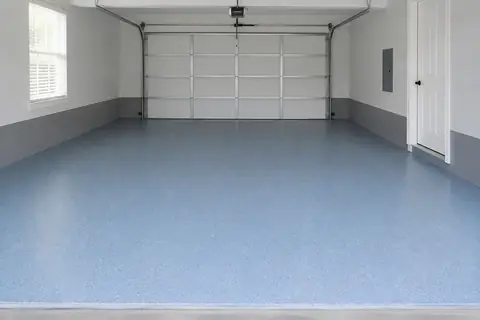
Material comparison
Polyurea coating systems
Polyurea is a broad family, so the service page replaces category claims with exact product, layer and cure questions.
Explore polyurea systems →
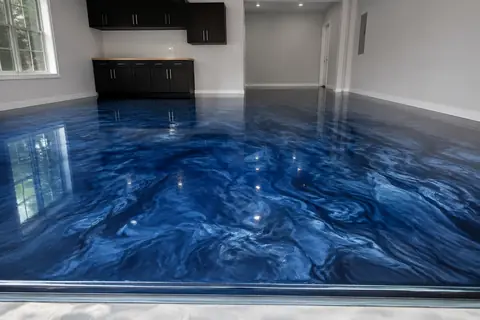
Premium decorative option
Metallic epoxy floors
Layered pigments create a one-of-a-kind marble effect for a show garage, studio or finished flex space.
Explore metallic floors →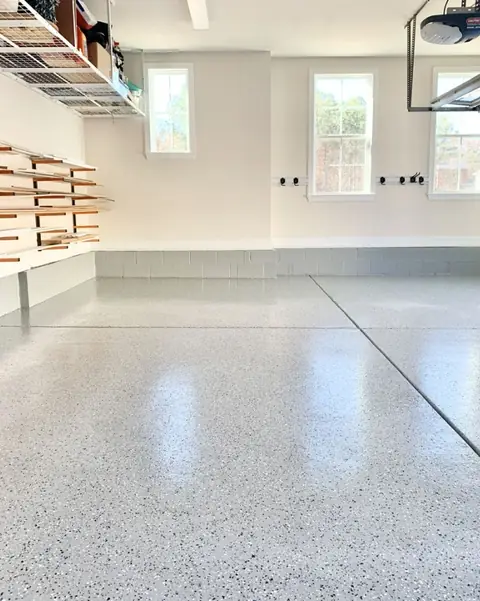
Simpler appearance
Solid-color garage floors
A uniform field makes defects and application variation more visible, so preparation and consistent coverage remain central.
Explore solid-color floors →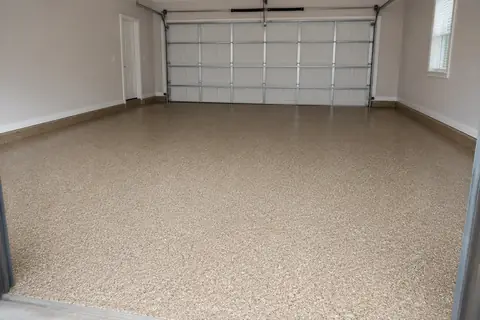
Texture option
Quartz broadcast floors
A mineral aggregate broadcast can serve different texture and wear goals than decorative vinyl flake; exact availability requires confirmation.
Explore quartz floors →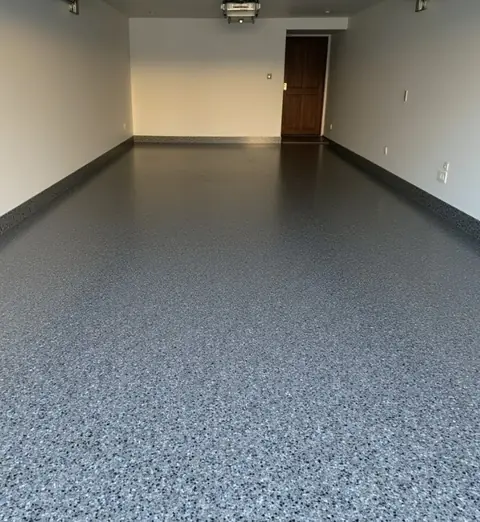
Existing floor
Coating removal and recoating
A failed or incompatible coating may need broad removal before a replacement system can bond to sound concrete.
Open removal guide →
Supporting scope
Crack, pit and spall preparation
Static defects may be prepared with system-compatible materials; movement and structural symptoms need different boundaries.
Open repair guide →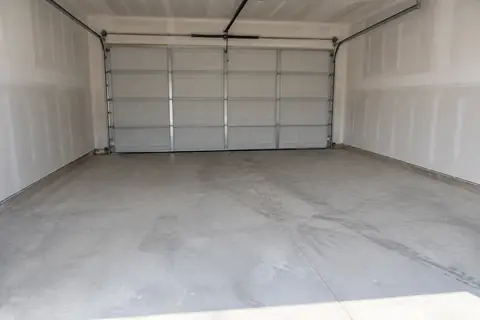
Move-in timing
New-home garage floor coatings
Plan the finished floor while the slab is still visible and accessible, without skipping age, residue, sealer or moisture checks.
Open new-home guide →More than one resin route
Choose the look you want; we compare the system that fits.
“Epoxy floor” is the search term homeowners know. The written assembly may use epoxy, polyaspartic, polyurea or a compatible combination—based on the slab, garage use, exposure and installation window.
Epoxy base and build coats
Epoxy may provide working time, body, color or the binder for metallic pigment and decorative flake. The exact product still has to fit the slab, exposure and protective finish.
Polyaspartic finish or full system
Selected products can provide faster cure plus enhanced UV, abrasion and tire-mark resistance. In Texas heat, their short working window makes product limits and installation timing critical.
Polyurea system options
Polyurea is not one universal formula. Fast-cure base and finish products should be compared by their actual data sheets, preparation, moisture limits and intended garage use.
Urethane-protected finishes
A compatible clear or pigmented urethane topcoat may protect an epoxy color or decorative field. UV, abrasion, tire marking, texture and recoat requirements remain product-specific.
Moisture-mitigation primer
A manufacturer-approved epoxy moisture-control layer may fit some tested slabs. It is not a universal cure for liquid water, drainage problems or readings outside the complete system limits.
Natural concrete alternatives
A penetrating or film-forming sealer and polished concrete create different looks and maintenance profiles from a resin broadcast system. They belong in the comparison when a decorative coating is not the right fit.
How the recommendation is made
Four decisions before a product name.
Use + appearance
Daily parking, show garage, workshop, home gym, storage, gloss, color and texture.
Concrete + old layers
New or old slab, sealer, builder residue, cracks, joints, moisture indicators and failing coating.
DFW conditions
Surface and air temperature, humidity, dew point, direct sun, ventilation and whether temperatures are rising.
System + hand-off
Named layers, preparation, texture, cure conditions and separate foot-traffic and vehicle-return times.
How correct installation works
One visible route from bare slab to bonded finish.
The sequence shows the work the final color would otherwise hide. The selected products may change, but a useful proposal still explains preparation, defects, joints, compatible layers and hand-off.
- Profile sound concrete and control dust.
- Classify repairs and preserve movement decisions.
- Apply the binder and broadcast within its working window.
- Finish, verify texture and document return-to-service.

Garage floor coating system
Educational routeRemove weak or foreign material and create the profile required by the named system.
Complete compatible static repairs while keeping control and movement-joint decisions explicit.
Control mix, coverage and working time as flakes are distributed into the receptive resin layer.
Finish with a compatible topcoat, verified texture and product-specific return-to-service guidance.
Generated educational visual. The actual slab, product data and written scope control every step.
Correct route vs. shortcut
Show the mistake, the consequence and the controlled alternative.
This replaces the previous text-heavy green and brown boxes. The visual now carries the diagnosis: contaminated unprofiled concrete can lead to peeling, while preparation establishes a surface the specified system can use.

What goes wrong
New resin follows the surface it is given
Rolling over contamination, smooth sealer or a failing old layer can leave the entire assembly dependent on a weak interface. The lower image shows the type of peeling that may follow—not a diagnosis of every failure.
Controlled route
Profile sound concrete, then install compatible layers
Mechanical preparation with dust extraction is followed by the product-specific repair, binder, broadcast and topcoat sequence. Joint decisions remain visible instead of being hidden by decoration.
AI-generated educational comparison. It explains workflow logic and is not represented as a completed company project or a universal specification.
Installation cross-section
What belongs beneath the decorative surface.
The cross-section remains schematic because no single layer count or chemistry applies to every garage. It shows the questions the written system must answer.
Compatible topcoatWear, color stability, chemical exposure, sheen and texture selected for actual garage use
Decorative broadcast or finishSpecified coverage and texture—never a substitute for preparation or repairs
Primer / binder / baseExact product chemistry, coverage, mix ratio and recoat window documented as one assembly
Prepared concrete profile + repairsSound, clean surface with defects classified and treated by compatible methods
Movement-joint detailDo not erase expected slab movement with a rigid decorative layer.
Existing concrete slabSoundness, moisture condition, past sealers/coatings and exposure evaluated first
Educational cross-section only. The selected manufacturer's data sheets and the condition of the actual slab control the final sequence, thickness, preparation and cure.
Color directions
Compare garage floor colors as compact square samples.
Start with a color family, then confirm the exact flake blend, sheen and texture in physical samples under the garage's daylight and artificial light.
Concept palette for design review—not manufacturer product names or exact color matches. Final choices depend on available coating systems and physical samples.
How the project should move
Diagnose → design → install → hand off.
Inspect the floor
Record current layers, stains, tire products, cracks, joints, moisture indicators, sunlight and intended use.
Write the system
Define removal, target profile, repairs, compatible layers, texture, termination and testing policy.
Control installation
Follow mix ratio, pot life, coverage, slab/air conditions, dew point and recoat windows.
Explain the hand-off
Provide product-specific foot and vehicle timing, cleaning, maintenance and verified warranty terms.
Process visibility
The scope should show what happens before the finished color hides the substrate.
Photo disclosure
Owner-supplied work-type image; crew identity and project provenance require verification.
Finish and use gallery
Make the floor easier to imagine in a real garage.
These views are organized by the decision they help with—layout, vehicle use, brightness and texture—rather than being passed off as unverified project claims.
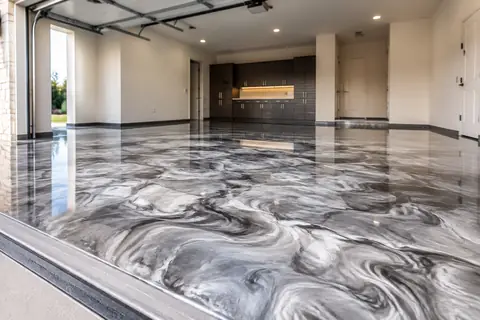
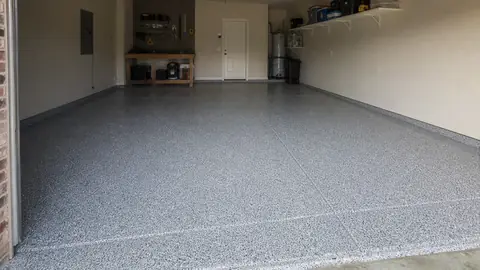
AI-generated finish concepts for design selection. They are not represented as completed company projects or specific DFW addresses; final color and movement vary by sample, installer technique and the selected system.
Dallas–Fort Worth city architecture
Fifteen growth markets plus five regional anchors.
All twenty pages begin with a clear garage-floor offer, then add independent local context, practical advice, official sources, service links, problem paths and nearby address-verified routes.
15 growth-market pages
Fast-growth and new-construction belt
These markets address new slabs, builder treatments, move-in timing, garage use and city-specific housing context—not a city-name swap.
5 regional anchors
Established DFW demand centers
Major-city pages address older coatings, varied housing stock, heavier use and neighborhood-specific renewal paths.
DFW-wide service intent comes from the owner. Every address remains subject to route confirmation; this site does not claim twenty offices.
Questions homeowners ask first
Six direct answers before the estimate.
Is every garage floor coating an epoxy floor?
No. Garage systems may use epoxy, polyaspartic, polyurea or compatible combinations. The quote should identify each product and the role of every layer instead of using one category word for the entire system.
Can a coating hide cracks and damaged concrete?
Color and flakes can make small repairs less noticeable, but they do not stop slab movement or make weak concrete sound. Cracks, pits, spalls and joints need to be classified and detailed before coating.
Why does surface preparation matter so much?
The new system can only bond to the surface that remains. Weak laitance, smooth sealer, oil, tire dressing, dust or a failing old coating can become the weakest interface unless they are identified and addressed.
Will a coated garage floor be slippery?
Gloss alone does not answer that question. Texture, broadcast material, topcoat, water or oil on the surface and cleaning needs all affect slip behavior. Samples should be evaluated for the actual garage use.
How long before the garage can be used again?
Return-to-service timing depends on the specified products, slab and air temperature, humidity, coat sequence and manufacturer instructions. Your written scope should state separate foot-traffic and vehicle-return times.
Do you cover all of Dallas–Fort Worth?
We serve the DFW area. Call +1 (817) 660-7732 or submit your address or ZIP code so route availability can be confirmed; this is one service-area business, not a separate office in every city.
Slab-first estimate
Send the slab condition before choosing the finish.
Tell us what the garage looks like now, the finish you want and your DFW location. You can also call +1 (817) 660-7732 for the next step.