Service 01
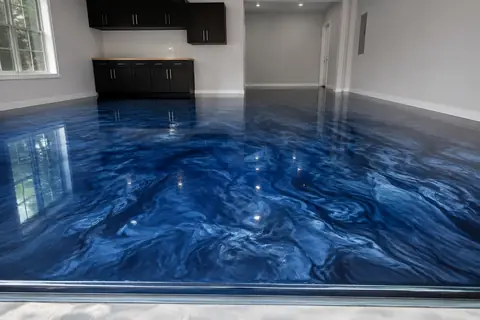
Epoxy Garage Floor Coatings
High-build, decorative and binder roles for complete garage-floor systems.
Open service page →Dallas–Fort Worth garage floor services
Every service page explains the best fit, common shortcut, correct installation route, alternatives, cost drivers and questions to ask before the floor is installed.
Ten independent service paths
Homeowners may search by appearance, chemistry or problem. These pages meet each intent without pretending that every garage receives the same product or preparation.
Service 01
High-build, decorative and binder roles for complete garage-floor systems.
Open service page →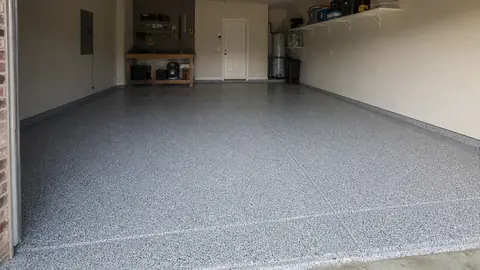
Service 02
A dense vinyl-chip broadcast with adjustable texture and a compatible clear finish.
Open service page →
Service 03
Polyaspartic products can serve as clear topcoats or as part of a fast-cure floor assembly. Their short working time, temperature window and substrate requirements make exact product data especially important in DFW.
Open service page →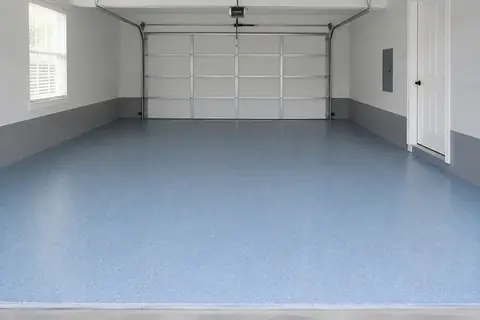
Service 04
Polyurea is a broad resin family, and contractor labels are often used loosely. A useful estimate identifies the exact product, whether it is aromatic or aliphatic, and what job it performs in the layer system.
Open service page →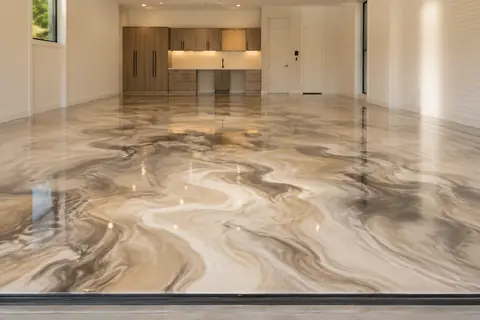
Service 05
Layered metallic pigments can make a garage feel like a finished showroom, gym or studio. The flowing pattern is installer-created, so samples guide the direction without promising an exact duplicate.
Open service page →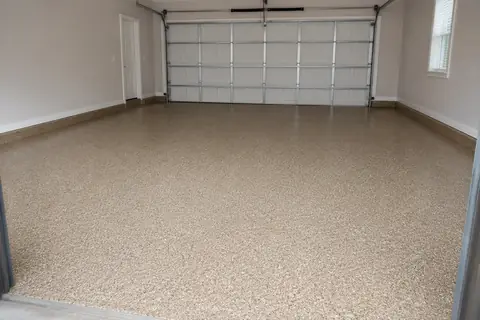
Service 06
Colored quartz aggregate creates a smaller-grain decorative field than vinyl flake. It can support textured, multi-layer resin systems when the aggregate, binder and topcoat are approved together.
Open service page →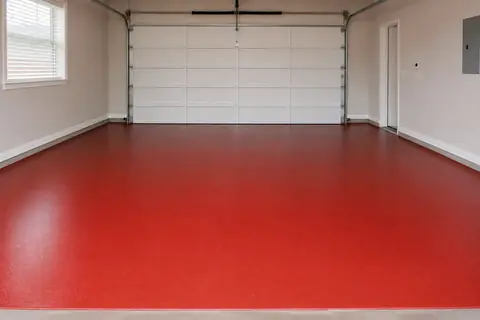
Service 07
A uniform gray, blue, red or custom color can give the garage a simple architectural look. Because the field is visually quiet, concrete repairs, roller transitions and wear can be easier to see.
Open service page →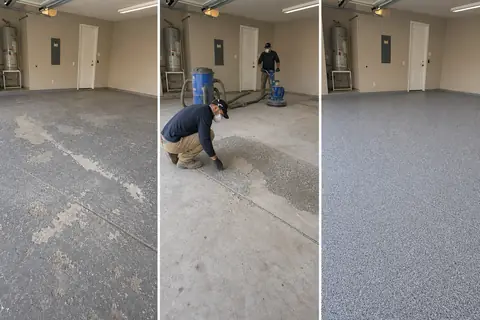
Service 08
Peeling, blistering or incompatible old layers can become the weak link beneath a new coating. Removal should continue to a verified sound boundary, followed by preparation and a compatible replacement system.
Open service page →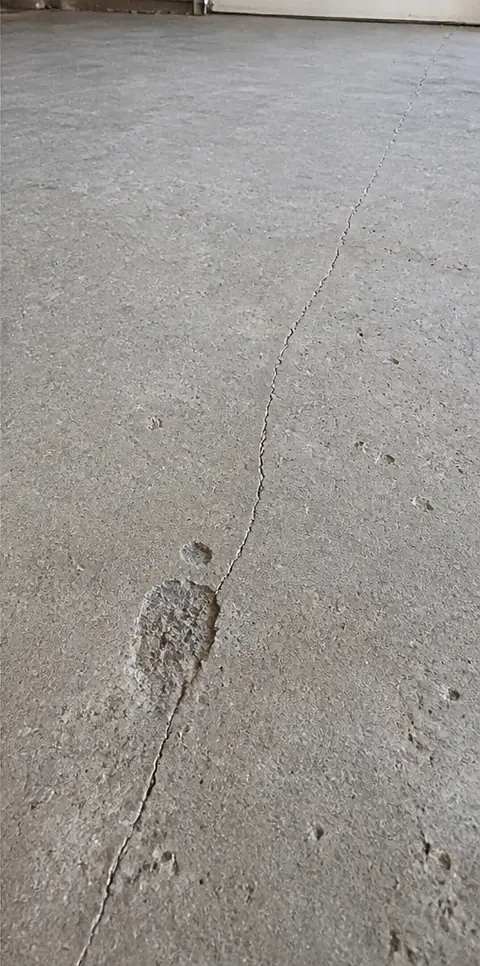
Service 09
Static defects can often be cleaned, opened and repaired with compatible materials. Moving joints, displacement, heaving and structural symptoms need a different boundary than cosmetic patching.
Open service page →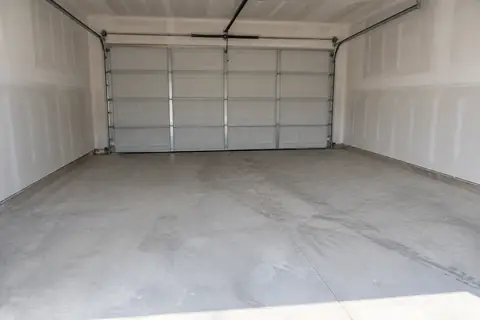
Service 10
An empty garage is the easiest time to see every joint, edge and builder mark. It is not permission to skip concrete-age, moisture, sealer and surface-profile checks.
Open service page →One non-negotiable comparison
Each service page carries its own fit and tradeoffs, while the installation logic remains visible and consistent.

What goes wrong
Rolling over contamination, smooth sealer or a failing old layer can leave the entire assembly dependent on a weak interface. The lower image shows the type of peeling that may follow—not a diagnosis of every failure.
Controlled route
Mechanical preparation with dust extraction is followed by the product-specific repair, binder, broadcast and topcoat sequence. Joint decisions remain visible instead of being hidden by decoration.
AI-generated educational comparison. It explains workflow logic and is not represented as a completed company project or a universal specification.
Not sure which service name fits?
Raised bubbles can involve trapped air, concrete outgassing, moisture vapor, contamination or separation between coats. The pattern and failure plane should be examined before the blisters are opened or covered.
Open diagnosis →A tire-shaped failure is commonly called hot-tire pickup, but heat is only part of the evidence. Surface preparation, contamination, complete cure, retained old layers and the exact coating system can all affect the bond.
Open diagnosis →Door-side color change often points to UV exposure, but resin chemistry, pigment, clear-coat selection, heat and cleaning products can also affect appearance. Compare protected and exposed zones before choosing a remedy.
Open diagnosis →Slip behavior depends on surface texture, topcoat, water, oil, tire products, dust and footwear—not gloss alone. The goal is to balance traction with a surface that can still be cleaned.
Open diagnosis →A surface can look clean while oil or silicone remains within the concrete. The coating plan should evaluate the depth and extent of contamination before deciding whether cleaning, removal or a no-install boundary is appropriate.
Open diagnosis →Slab-first estimate
Send the current condition, desired look, approximate size, ZIP code and garage use. The proposed scope should name every layer and preparation step.