Decorative coverage, chip texture and a practical garage finish are priorities.
Dallas–Fort Worth full-flake systems
Full-flake garage floors need a complete system beneath the chips.
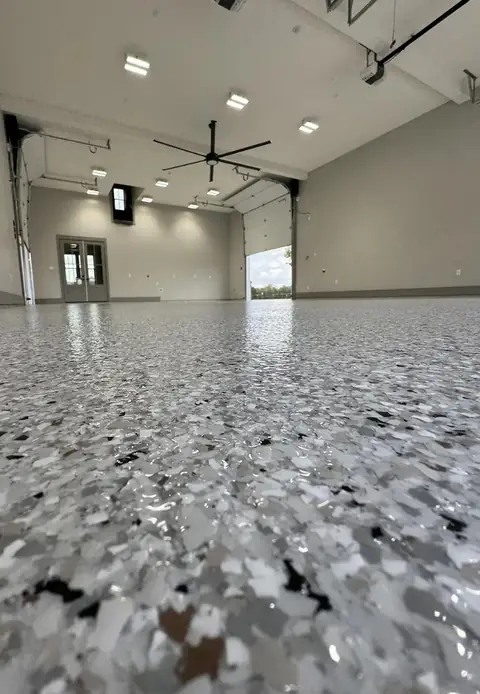
A dense decorative broadcast can create broad color coverage and controllable texture. It cannot substitute for sound concrete, contamination removal, repairs, joint decisions or compatible resin layers.
Using dense flakes to hide weak concrete, active cracks or an unidentified old coating.
What exact binder, broadcast coverage and topcoat form the proposed assembly?
Correct vs. incorrect
The broadcast step only works inside a controlled installation.
Full-flake is a finish description, not a universal chemistry. The order, timing and compatibility of the underlying products still determine whether the chips become part of a bonded system.

What goes wrong
Flakes cannot rescue a weak bond
Rolling over contamination, smooth sealer or a failing old layer can leave the entire assembly dependent on a weak interface. The lower image shows the type of peeling that may follow—not a diagnosis of every failure.
Controlled route
Prepare first, then build the broadcast
Mechanical preparation with dust extraction is followed by the product-specific repair, binder, broadcast and topcoat sequence. Joint decisions remain visible instead of being hidden by decoration.
AI-generated educational comparison. It explains workflow logic and is not represented as a completed company project or a universal specification.
Full-flake system route
Four visible stages before the floor returns to use.
The new sequence follows the reference site's visual logic while explaining a completely different trade. Preparation, repair, wet broadcast and the final section are shown in one compact card.
- Prepare the bonding surface—not just the visible dirt.
- Resolve defect and joint details before decoration.
- Broadcast evenly inside the binder's working window.
- Scrape, clean, seal and verify the hand-off.

Garage floor coating system
Educational routeRemove weak or foreign material and create the profile required by the named system.
Complete compatible static repairs while keeping control and movement-joint decisions explicit.
Control mix, coverage and working time as flakes are distributed into the receptive resin layer.
Finish with a compatible topcoat, verified texture and product-specific return-to-service guidance.
Generated educational visual. The actual slab, product data and written scope control every step.
In plain language
Flakes are placed into wet resin, then the loose field is refined and sealed.
A prepared slab receives the specified primer or binder. Decorative vinyl flakes are broadcast while that layer can accept them. After cure, loose and upright chips are removed according to the selected finish, the surface is cleaned, and a compatible clear or pigmented finish coat completes the system.
That general description does not set one thickness or one schedule. Product data, coverage rates, chip size, texture target and site conditions must do that.
Installation cross-section
Five visible decisions and one joint boundary.
Compatible topcoatWear, color stability, chemical exposure, sheen and texture selected for actual garage use
Scraped full-flake fieldDecorative vinyl flakes broadcast into wet binder, cured, scraped and vacuumed before sealing
Primer / binder / baseExact product chemistry, coverage, mix ratio and recoat window documented as one assembly
Prepared concrete profile + repairsSound, clean surface with defects classified and treated by compatible methods
Movement-joint detailDo not erase expected slab movement with a rigid decorative layer.
Existing concrete slabSoundness, moisture condition, past sealers/coatings and exposure evaluated first
Educational cross-section only. The selected manufacturer's data sheets and the condition of the actual slab control the final sequence, thickness, preparation and cure.
What it can improve
Use full-flake for the right objective.
Decorative coverage can make an everyday garage feel more finished, but the sales conversation should separate appearance goals from slab repair and exposure requirements.
Visual variation
A dense multicolor field can reduce the visual prominence of minor tonal changes and compatible repairs without claiming to erase movement.
Defined surface texture
Chip size, scraping and topcoat choices provide levers for texture, cleaning and feel underfoot. Samples should be judged wet and dry.
Ordinary garage use
Parking, storage, hobby work, sunlight at the door and household chemicals should inform the topcoat and maintenance discussion.
When not to coat yet
The right answer can be removal, further testing or no installation.
Dense flakes make a finished surface visually busy; that makes it especially important not to let appearance hide unresolved substrate conditions.
Active water or vapor concern
Find the source, document indicators and test within the limits of the proposed products before closing the surface.
Unsound or moving concrete
Heaving, displaced cracks, broad weak material or structural symptoms exceed what a decorative broadcast can correct.
Unverified old coating
If the retained layer is incompatible or poorly bonded, installing over it protects the shortcut—not the new system.
Full-flake installation route
Inspect → prepare → broadcast → finish.
Inspect and write the boundary
Map coatings, contamination, defects, joints, moisture indicators, edges, verticals and intended use.
Prepare and repair
Remove unsound materials, create the specified profile, clean thoroughly and complete compatible defect details.
Bind and broadcast
Control mix, coverage and working time; distribute the selected flakes evenly while the binder is receptive.
Scrape, clean and topcoat
Remove loose chips, refine the field, vacuum and apply the compatible finish at its documented coverage.

Timing matters
Broadcast distribution must happen within the specified binder's workable installation window.
Work-type image
Owner-supplied work-type reference; it is not presented as a completed Texas Garage Floor Coating Installers project.
Finish comparison
Full-flake is one visual system among several.
| Finish direction | Useful when | Question before selection |
|---|---|---|
| Full-flake broadcast | Broad decorative coverage and chip texture are wanted | What coverage, scrape profile and clear-coat build are specified? |
| Partial-flake broadcast | More base color remains visible | How will distribution stay intentional and consistent? |
| Solid color | A uniform, simple field is preferred | Are repairs and application variation acceptable when more visible? |
| Metallic effect | A flowing, unique appearance is the priority | Does real portfolio evidence match the finish expectation? |
| Quartz broadcast | Different aggregate texture or wear goals are being considered | Is it an approved service, and what system holds and seals the aggregate? |
Scope and maintenance
The proposal should make the finish reproducible.
- Measured area, verticals, edges and terminations
- Old coating and contamination removal boundary
- Preparation method and product-required target profile
- Crack, pit, spall and movement-joint details
- Named primer/binder, flake blend, size and coverage
- Scrape, vacuum and compatible topcoat sequence
- Texture sample, cleaning method and maintenance guidance
- Verified foot and vehicle return windows
Related decisions
Continue from system, symptom or city.
Compare epoxy roles
See where epoxy may fit as primer, build coat or system component.
Epoxy coating guide →Existing coating peeling?
Identify the failure plane before another decorative layer is proposed.
Peeling diagnosis →Building or moving in Celina?
Review the local questions for newer and existing garage slabs.
Celina city guide →Full-flake FAQ
Six questions to settle before choosing the chip blend.
What does full-flake mean?
It normally describes decorative flakes broadcast densely into a wet resin layer so the chips cover most or all of the visible field. The proposal should still state the specified coverage, chip size, binder, scrape method and topcoat rather than relying on the phrase alone.
Are full-flake floors always epoxy?
No. The binder or base may be epoxy, polyaspartic, polyurea or another compatible resin, and the finish coat may use a different compatible chemistry. Ask for every product and layer to be named.
Does full-flake hide cracks and bad concrete?
It can reduce visual variation after compatible repairs, but it does not stabilize movement, remove contamination or make weak concrete sound. Those conditions remain part of the substrate scope.
Is a full-flake garage floor slippery?
There is no universal answer. Chip profile, scraping, topcoat build, added texture, liquids and cleaning all affect slip behavior. The chosen sample should be evaluated for the actual garage use.
Can full-flake be installed over an old coating?
Only if the retained coating is identified, compatible and demonstrably well bonded. A weak old layer becomes the bond limit for everything installed above it and may require removal.
How long before a car can return?
Vehicle return is controlled by the named products, coat sequence, slab and air temperature, humidity and manufacturer instructions. Full-flake describes the finish style, not one universal cure schedule.
Industry examples consulted: Sherwin-Williams' official resin-flooring pages describe flake systems as flakes placed in resin and show a four-layer decorative flake assembly with a broadcast into epoxy and a sealed topcoat. These examples support the system concept only; they do not imply that this business installs those products.
Slab-first estimate
Choose the system before the flake color.
Send a wide floor view, close-ups of defects and old coatings, approximate size, garage use and ZIP code. The live proposal should identify every layer and the reason it fits.