Choose a decorative surface that belongs with the rest of the home—not a dull unfinished slab.
Decorative epoxy garage floors in Celina, Texas
Turn your Celina garage into a finished part of your home.
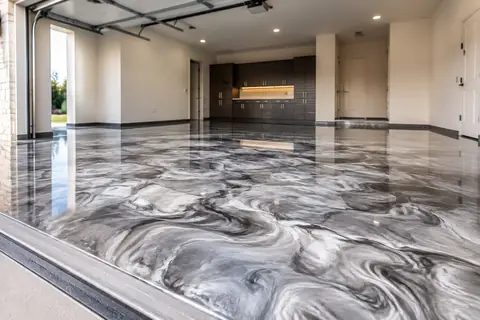
Choose a full-flake, metallic or solid-color finish for a cleaner, brighter garage—whether the home is brand new, the concrete is dusty or cracked, or an old coating is starting to fail.
- Finish selected around your space
- Concrete prepared before decoration
- Foot and vehicle timing stated clearly
A continuous bonded finish is easier to sweep and wipe than porous, dusting bare concrete.
Parking, storage, workshop needs, texture and return-to-service timing belong in the proposal.
Plan a Celina garage floor
Start with the garage you received. Try the finish you want.
Start with the garage you have, then compare appearance and system routes. This is a visual planning tool—not a price quote or product specification.
Generated previews illustrate design directions. They are not completed company projects, exact color samples, prices or a substitute for inspecting the slab and matching approved products.
Choose the look first
Eight ways a Celina garage can feel finished.
Homeowners search for “epoxy flooring,” but the visible result may be metallic, full- or partial-flake, quartz, or a clean solid-color field. Start with the room you want; the exact compatible layer system comes next.
Showpiece finish
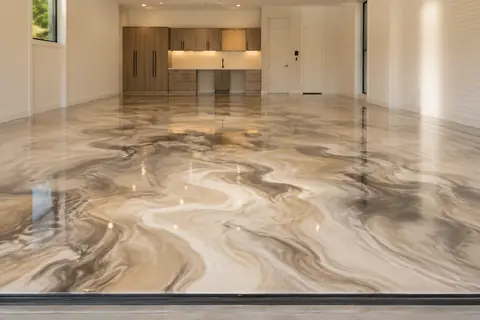
Metallic marble
A flowing, one-of-a-kind pattern with dramatic depth for homeowners who want the garage to feel designed—not merely coated.
Request this direction →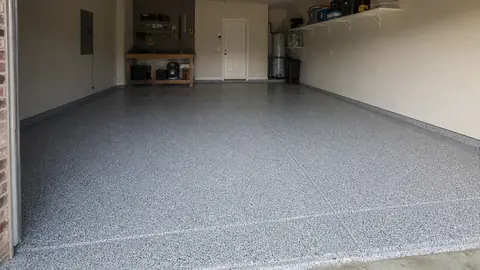
Everyday favorite
Full-flake
A practical decorative field with broad chip coverage, visual texture and many neutral, dark or bold blend directions.
Request this direction →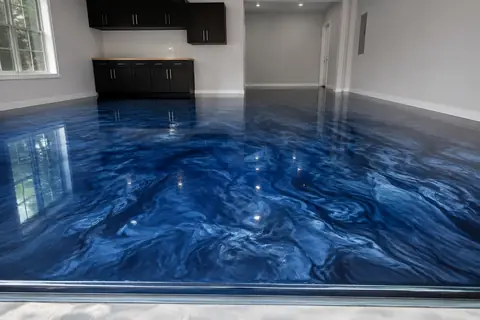
Bold color direction
Deep blue metallic
A saturated custom look for a garage, home gym or workshop where color is part of the finished room.
Request this direction →
Cool showpiece finish
Silver metallic
A cooler marble-like direction with flowing pigment variation; later scratches and touch-ups can remain more visible than on a busy flake field.
Request this direction →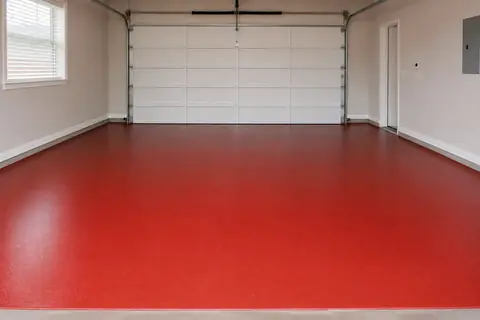
Solid-color finish
Performance red
A uniform saturated color for a bold workshop or collector garage. Even coverage and substrate repair quality stay easy to see.
Request this direction →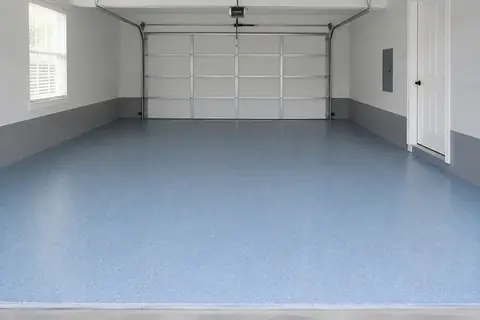
Bright color finish
Sky blue
A lighter, cleaner-looking solid field for a garage, hobby room or home gym, with texture selected around wet use and cleaning.
Request this direction →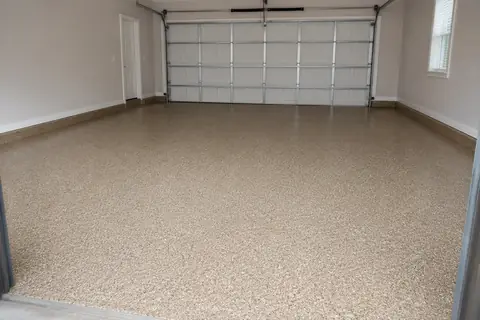
Mineral aggregate
Quartz broadcast
A dense small-grain broadcast with a different texture and visual scale than vinyl flake; approved products and topcoat build must be confirmed.
Request this direction →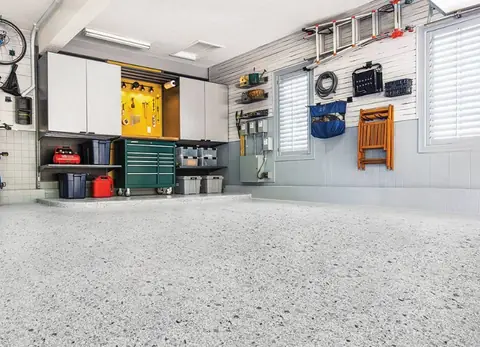
Lighter broadcast
Partial flake
A deliberate scattered-chip look that leaves more base color visible and requires consistent distribution from edge to edge.
Request this direction →Generated finish concepts for visual planning—not completed projects or promises that every slab will produce the same pattern. Final appearance depends on samples, products, preparation and installer technique.
Texas heat and hot tires
Heat changes the installation plan. It does not ban epoxy from a Celina garage.
Dallas–Fort Worth normal high temperatures are about 95.6°F in July and 95.8°F in August. That matters during installation because a garage slab, the coating material and the air may sit outside a selected product's allowable window even when the finished system would be suitable for vehicle use.
For one official example, the Sikafloor‑515 polyaspartic data sheet lists an upper application range around 85–86°F, about 10 minutes of pot life at 86°F, and warns against application while the slab and air are warming because pinholes may form. It also describes enhanced hot-tire-marking resistance—not absolute immunity.
Practical answer: select the complete system first, then schedule the work around that system's surface temperature, humidity, dew point, rising or falling temperature, cure and vehicle-return limits. A generic “one-day floor” promise is not enough.
How we make the choice
Look, use, slab and weather—not one buzzword.
Use + appearance
Daily parking, show garage, workshop, home gym, storage, gloss, color and texture.
Concrete + old layers
New or old slab, sealer, builder residue, cracks, joints, moisture indicators and failing coating.
DFW conditions
Surface and air temperature, humidity, dew point, direct sun, ventilation and whether temperatures are rising.
System + hand-off
Named layers, preparation, texture, cure conditions and separate foot-traffic and vehicle-return times.
Problem → starting solution
Choose the Celina garage that looks most like yours.
You do not need to diagnose the concrete or know a product name. Start with the situation you recognize; the estimate connects it to the next useful step and the finish you want.
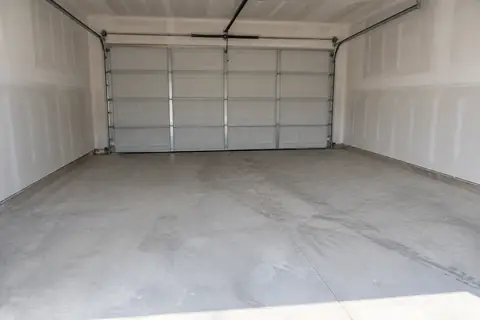
New home
The garage is empty and unfinished
Starting solution
Show us this condition →Choose the finish before storage and vehicles move in; verify concrete age, builder residue, sealer, joints and moisture before preparation.
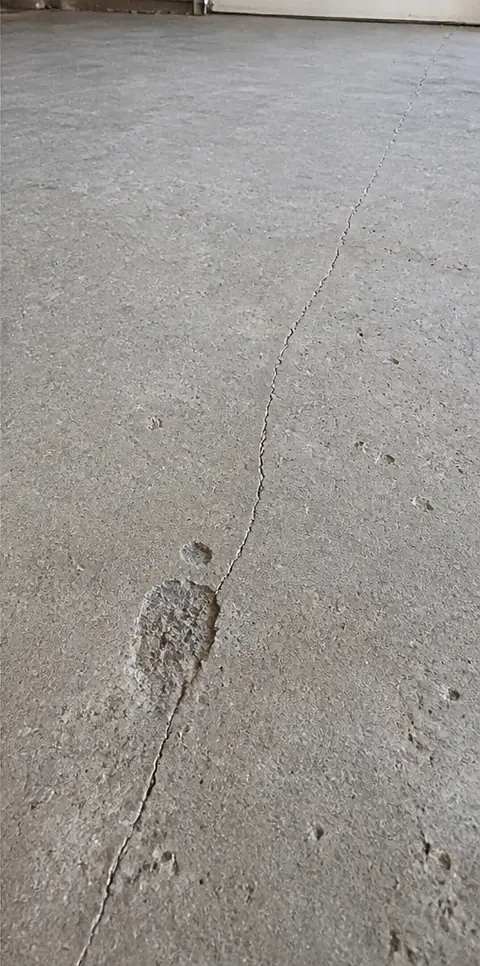
Bare concrete
The slab is dusty, stained, cracked or pitted
Starting solution
Show us this condition →Map defects, remove weak material and contamination, classify movement, then include compatible repairs in the coating scope.
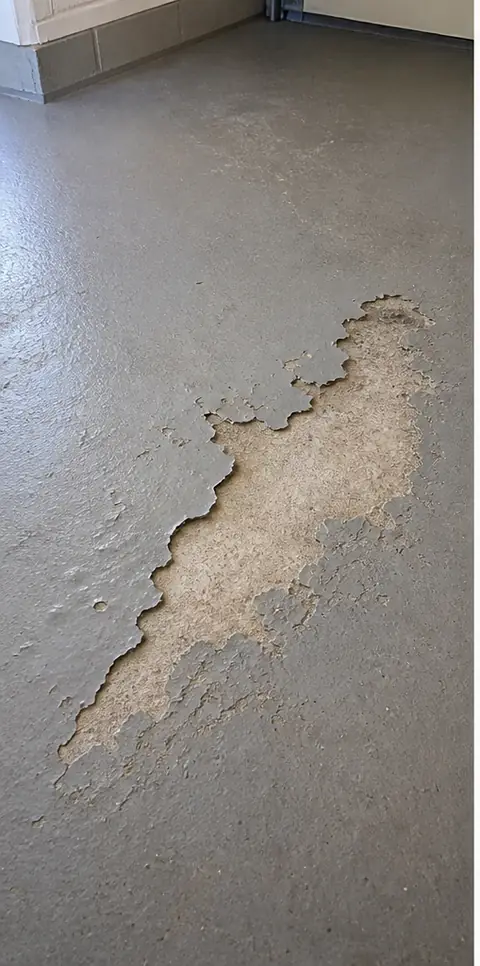
Old coating
The existing paint or coating is peeling
Starting solution
Show us this condition →Find the failure plane and remove to a verified sound boundary; do not lock a new finish onto a loose old layer.
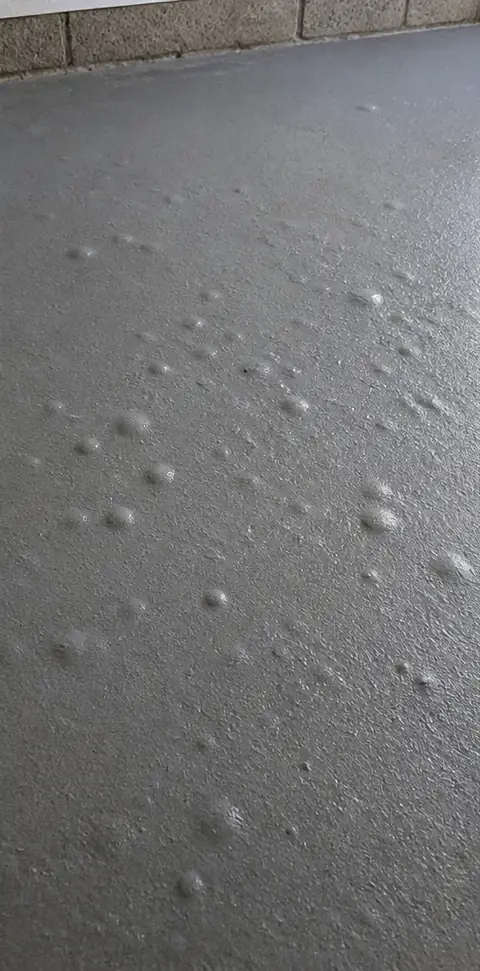
Raised defects
The floor is bubbling or blistering
Starting solution
Show us this condition →Separate trapped air, outgassing, vapor and intercoat failure before deciding between a local repair and a broader removal.
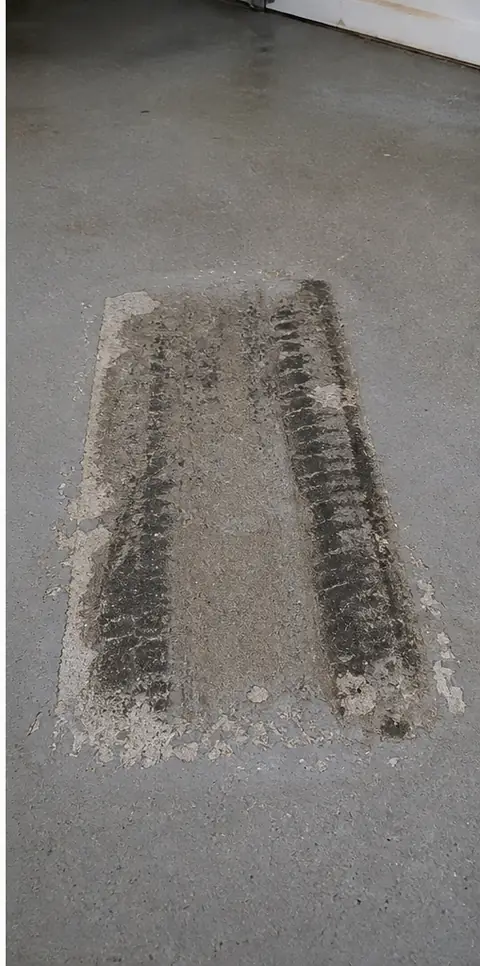
Parking zones
Tires leave marks—or lift the coating
Starting solution
Show us this condition →Check complete cure, contamination, preparation and the bond of every layer; then specify a garage-rated system and vehicle-return time.
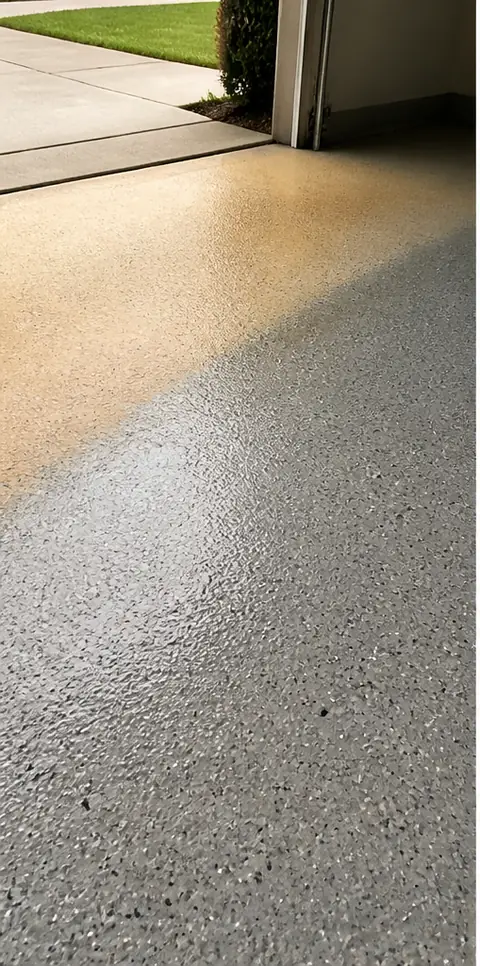
Sun at the door
The coating is fading or yellowing
Starting solution
Show us this condition →Compare door-side UV and heat with the exact color coat and topcoat; choose a product-specific UV-stable finish where exposure requires it.
AI-generated educational examples show finish directions and symptoms, not completed projects or diagnoses for a named Celina address.
Why homeowners coat the garage
A more useful floor—not just a different color.
The right system makes the garage feel finished while preparation and compatible layers do the less visible work.
Cleaner
Less exposed concrete dust
A bonded continuous finish covers the porous wear surface that can shed dust onto cars, storage and tools.
Easier care
Simpler sweeping and wipe-down
Texture and gloss are selected so routine cleaning is more practical without ignoring wet traction.
Organized timing
A planned installation and hand-off
The scope should state preparation, application steps and verified foot and vehicle return windows.
Built for your use
Parking, storage or workshop
The coating system, texture and finish are chosen around tires, tools, door-side sun and how the garage is actually used.
Garage floor services in Celina
Choose a finish—and include the work that makes it last.
The estimate starts with the garage you want, then defines removal, preparation, repairs and compatible layers for the concrete you actually have.
Metallic epoxy floors
Flowing pigments create a high-end marble effect for a show garage or finished flex space.
Request a metallic finish →Full-flake garage floors
Decorative chip coverage adds pattern and a controllable texture over a prepared system.
View full-flake service →Solid-color epoxy floors
A cleaner uniform field for homeowners who prefer minimal color and fewer visual details.
Request a solid-color finish →Epoxy coating systems
Primer, build, decorative and protective roles planned as one compatible assembly.
View epoxy service →Old coating removal
Remove failing paint or coating to a verified sound boundary before rebuilding the floor.
Show us the old coating →Crack, pit and spall preparation
Prepare compatible static repairs while keeping movement-joint decisions visible.
Show us the damage →Fast-cure system options
Compare product-specific working time and return-to-use guidance when the schedule matters.
Discuss project timing →Quartz broadcast options
A mineral aggregate route for a different decorative texture and use profile.
Ask about quartz →Problem → cause → solution direction
A local estimate should connect the symptom to evidence.
Coating peels in tire zones
Visible location is recorded, but no cause is declared from the photograph alone.
Cure, contamination, profile or weak retained layer
The failure plane and surrounding adhesion narrow the possibilities.
Remove to a verified boundary and rebuild compatibly
The final scope follows testing; a stronger clear coat cannot repair a loose layer below.
Local installation technology
The same visible finish can conceal very different foundations.

What goes wrong
New resin follows the surface it is given
Rolling over contamination, smooth sealer or a failing old layer can leave the entire assembly dependent on a weak interface. The lower image shows the type of peeling that may follow—not a diagnosis of every failure.
Controlled route
Profile sound concrete, then install compatible layers
Mechanical preparation with dust extraction is followed by the product-specific repair, binder, broadcast and topcoat sequence. Joint decisions remain visible instead of being hidden by decoration.
AI-generated educational comparison. It explains workflow logic and is not represented as a completed company project or a universal specification.
More problems we check
Garage-floor symptoms that should be included in your estimate request.
These conditions can overlap. Photos help locate the symptom; inspection and product history help define the cause and repair boundary.
Oil stains before coating
Determine whether contamination remains within the concrete.
Open diagnosis →Fisheyes or craters
Look for silicone, oil, surfactant or surface-tension contamination.
Included in assessmentUneven flake coverage
Check broadcast timing, density, batch transitions and scrape pattern.
Open diagnosis →Roller marks or lap lines
Review working time, temperature, coverage and wet-edge control.
Included in assessmentCloudy or milky topcoat
Separate trapped moisture, blush, cure conditions and cleaning residue.
Included in assessmentLifting at edges or joints
Inspect termination, water entry, movement and preparation at boundaries.
Included in assessmentSoft or tacky coating
Verify mix ratio, induction, cure temperature, age and chemical exposure.
Open diagnosis →Why this page is specific to Celina
New-home corridors and established addresses create different floor histories.
Celina's 2040 Comprehensive Plan describes the south sector between the Dallas North Tollway, Collin County Outer Loop, Preston Road and Frontier Parkway, including the Light Farms area. Newer communities such as Light Farms, Mustang Lakes and Cambridge Crossing make the new-home scenario especially relevant: owners may be choosing a garage finish before storage, vehicles and household products fill the space.
Addresses closer to Downtown Celina or reached from older FM 455 and FM 428 corridors may bring a different question—paint, sealer, oil, tire products or an earlier coating already on the concrete. These place names guide relevant content and scheduling questions; they are not claims that the company completed work on a named street or in a named neighborhood.
The City's current capital-planning page projects about 2,400 single-family permits for FY 2026 after 2,643 in the preceding year. That market fact belongs here, below the service offer. It does not determine the condition of any individual garage.
Practical Celina advice: for a new home, photograph the empty slab, every control joint, the garage-door edge and any builder paint or drywall residue before shelving and vehicles cover the floor.
Celina garage checklist
What we need to see before recommending the floor.
- New home, bare concrete, paint or an existing coating
- Dusting, cracks, pits, spalls and previous repairs
- Peeling edges, bubbles, tire-zone wear and stains
- Control joints and cracks that may continue moving
- Water, salts or moisture indicators at the slab and door
- Direct sunlight, garage temperature and ventilation
- Parking, storage, workshop, pets and cleaning needs
- Desired flake coverage, color family, gloss and texture
Celina installation route
From address-specific evidence to a defined hand-off.
Review photos and history
New build or existing home, known treatments, old products, defects, planned use and ZIP code.
Inspect the slab
Confirm the removal boundary, profile, repairs, joints, moisture policy, edges and access.
Write and install the system
Name each product and control mixing, conditions, coverage, broadcast, texture and recoat windows.
Verify the hand-off
Provide actual foot and vehicle timing, cleaning, maintenance and approved warranty language.
Celina cost factors
Square footage is only the visible part of the scope.
Preparation and removal, contamination, concrete repair, joint details, moisture decisions, vertical surfaces, access, layer chemistry, broadcast density, texture and topcoat build can all change material and labor.
Your assessment and written proposal define the current price, inclusions and exclusions for the actual garage.
Celina coverage
One DFW service-area route, with nearby cities checked by address.
The Celina page is a real local content hub, not evidence of a storefront. Neighborhood, property access and route availability are confirmed before scheduling.
Primary page
Celina, TXNew and existing residential garage floor coating assessment.
Nearby route checks
Each linked city now has its own local content and official source; exact service availability is still confirmed by address.
Celina garage floor FAQ
Six local questions before a new or existing slab is coated.
Can you coat the garage floor in a brand-new Celina home?
Yes, when the actual concrete is ready. New concrete can still have curing products, sealer, drywall compound, paint or a very smooth finish. Those conditions should be checked and prepared before the coating system is installed.
What if my Celina garage floor is cracked, pitted or dusty?
Send wide photos and close-ups with your estimate request. Static cracks, pits and weak dusty concrete may have preparation and repair options; moving cracks or structural symptoms need a different boundary.
Can a peeling or bubbling garage coating be repaired?
Sometimes. The loose layer and likely cause must be identified first. A small repair can make sense when the surrounding coating is sound; widespread bond failure may require broader removal.
How soon can I walk or park on the finished floor?
That depends on the exact products, temperature and completed layer system. The written proposal should give separate foot-traffic and vehicle return times instead of using one generic promise.
Which garage-floor finish is easiest to keep clean?
A continuous, properly bonded finish is generally easier to sweep and wipe than bare, dusting concrete. Texture, flake coverage and gloss should still be chosen around wet traction, vehicles, tools and the way the garage is cleaned.
Does Texas heat make epoxy peel under hot tires?
Not automatically. Hot-tire pickup is a real failure pattern, but the category name alone does not prove the cause. Product suitability, surface preparation, moisture, complete cure, layer compatibility and return-to-vehicle timing all matter. Some epoxy products are designed for garage tire exposure, while selected polyaspartic finishes advertise enhanced tire-mark resistance; neither label replaces the written product data.
Slab-first estimate
Start the Celina estimate with the actual slab.
Send the address or ZIP, one wide garage view, close-ups of joints and defects, known builder or previous floor products, approximate size and planned use—or call +1 (817) 660-7732.