Turn dusty concrete into a garage that feels intentional and easier to maintain.
Epoxy and decorative garage floors in Melissa, Texas
Give your Melissa garage a finished floor before dust and storage take over.
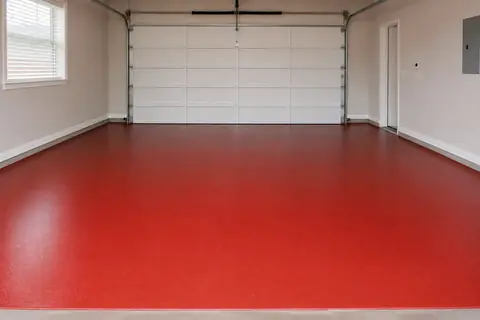
A new bare slab, a dusty everyday garage or an old painted floor can each become a cleaner-looking space—but the right coating route depends on what is already on the concrete.
- Beautiful finish options
- Preparation written into the scope
- Clear foot and vehicle timing
Parking, storage, workshop, gym, texture, sunlight and cleaning shape the recommendation.
Removal, profiling, repairs, layers and cure are explained before installation.
Plan a Melissa garage floor
Start with the garage you have. Build the finish you want.
Start with the garage you have, then compare appearance and system routes. This is a visual planning tool—not a price quote or product specification.
Generated previews illustrate design directions. They are not completed company projects, exact color samples, prices or a substitute for inspecting the slab and matching approved products.
Problem → starting solution
Which Melissa garage looks most like yours?
Choose the visible condition without guessing the cause. The estimate connects the symptom, slab history and preferred appearance to the next useful step.
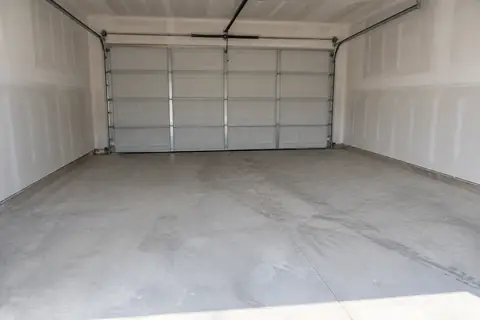
New home
The garage is empty and unfinished
Starting solution
Show us this condition →Choose the finish before storage and vehicles move in; verify concrete age, builder residue, sealer, joints and moisture before preparation.
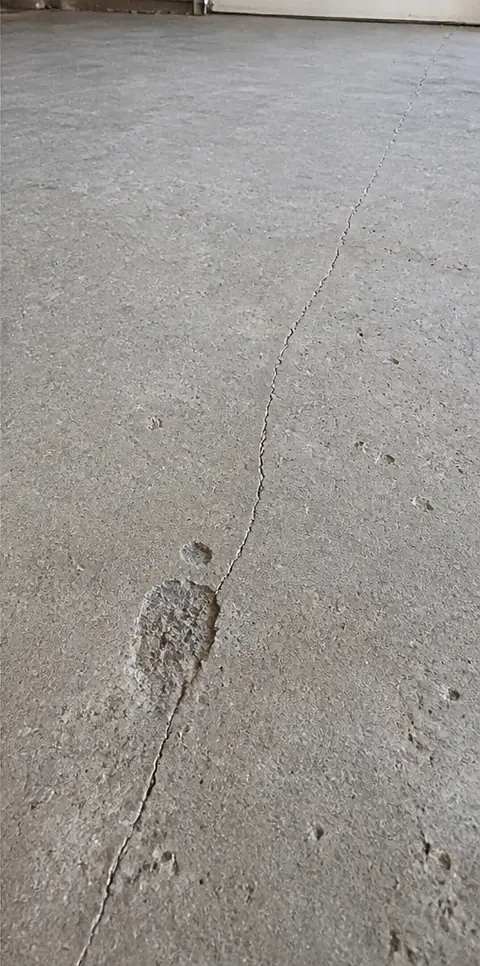
Bare concrete
The slab is dusty, stained, cracked or pitted
Starting solution
Show us this condition →Map defects, remove weak material and contamination, classify movement, then include compatible repairs in the coating scope.
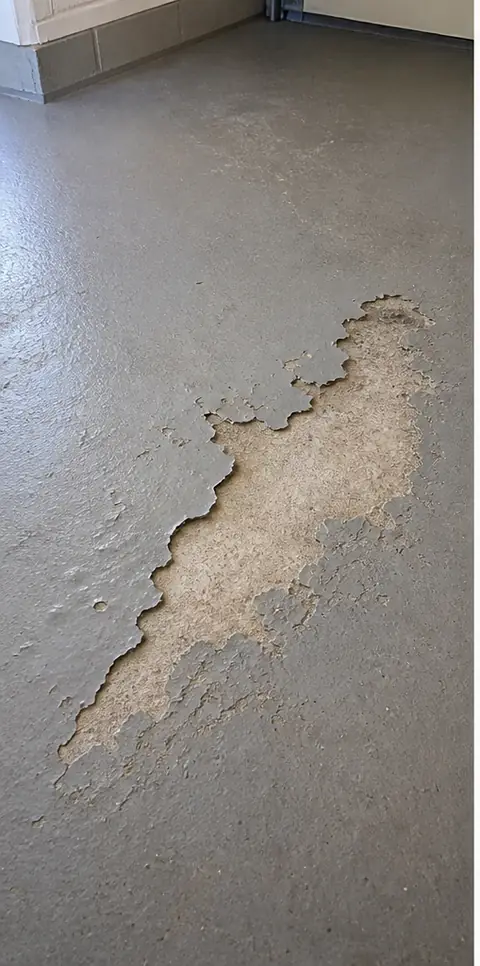
Old coating
The existing paint or coating is peeling
Starting solution
Show us this condition →Find the failure plane and remove to a verified sound boundary; do not lock a new finish onto a loose old layer.
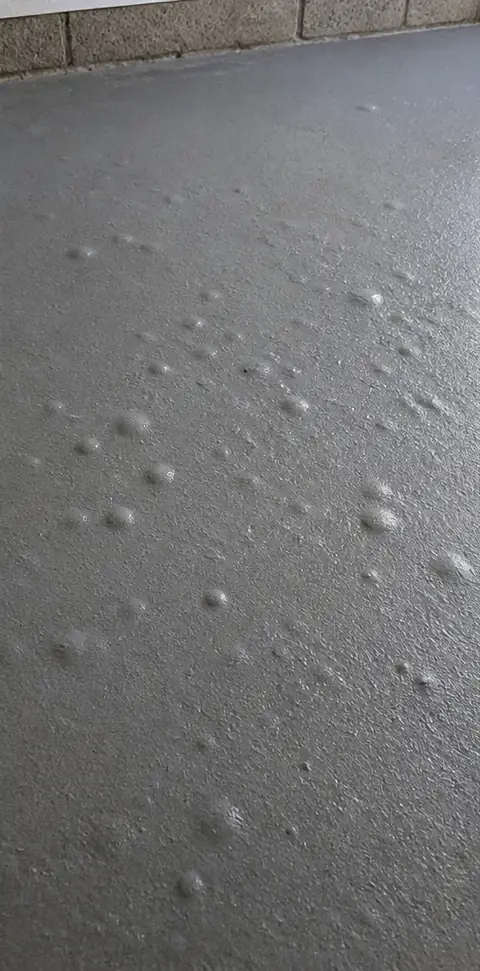
Raised defects
The floor is bubbling or blistering
Starting solution
Show us this condition →Separate trapped air, outgassing, vapor and intercoat failure before deciding between a local repair and a broader removal.
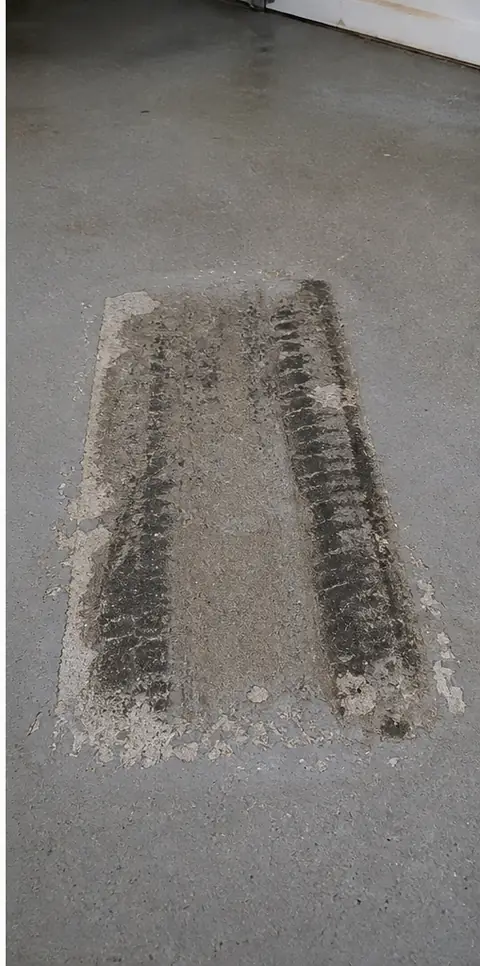
Parking zones
Tires leave marks—or lift the coating
Starting solution
Show us this condition →Check complete cure, contamination, preparation and the bond of every layer; then specify a garage-rated system and vehicle-return time.
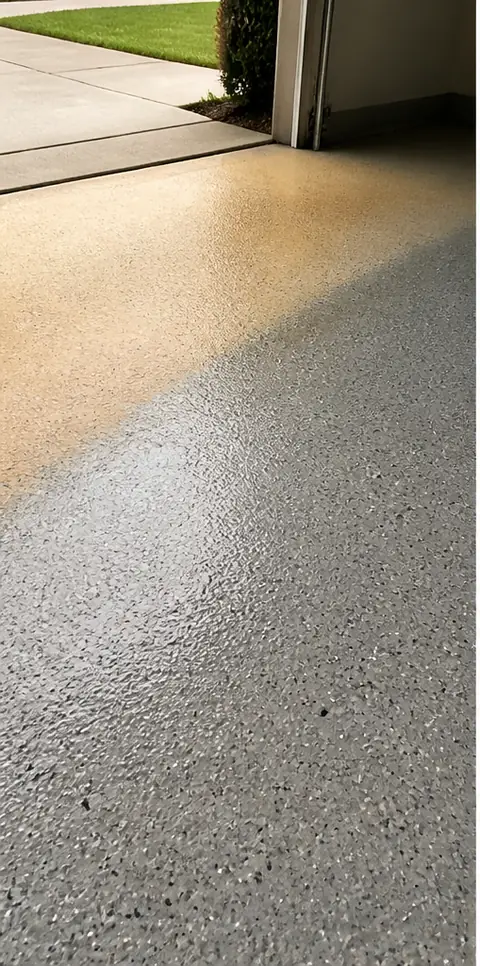
Sun at the door
The coating is fading or yellowing
Starting solution
Show us this condition →Compare door-side UV and heat with the exact color coat and topcoat; choose a product-specific UV-stable finish where exposure requires it.
Finish directions
Beautiful garage floors for everyday use or a showpiece room.
Metallic, full-flake, quartz, partial-flake and solid-color surfaces create different visual fields. Physical samples, texture and approved products complete the selection.
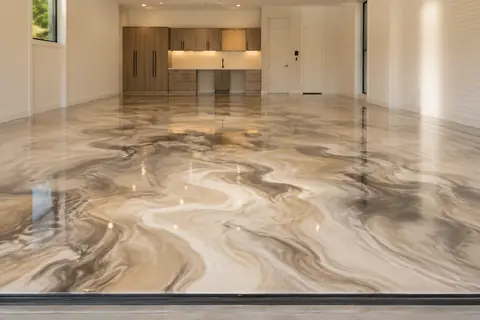
Showpiece finish
Metallic marble
A flowing, one-of-a-kind pattern with dramatic depth for homeowners who want the garage to feel designed—not merely coated.
Request this direction →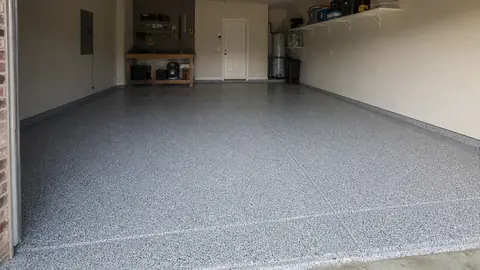
Everyday favorite
Full-flake
A practical decorative field with broad chip coverage, visual texture and many neutral, dark or bold blend directions.
Request this direction →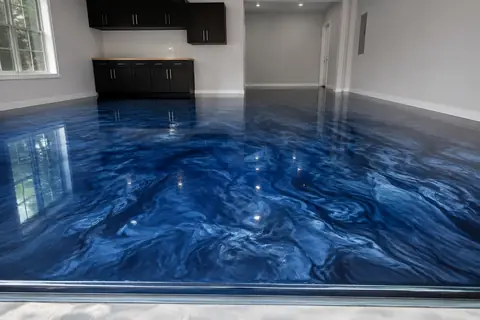
Bold color direction
Deep blue metallic
A saturated custom look for a garage, home gym or workshop where color is part of the finished room.
Request this direction →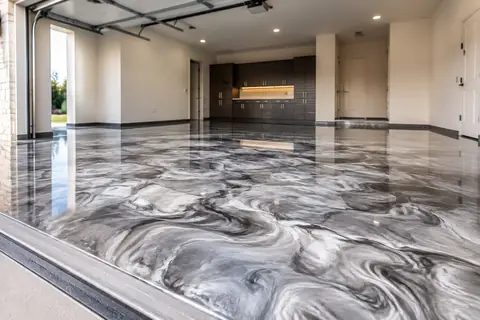
Cool showpiece finish
Silver metallic
A cooler marble-like direction with flowing pigment variation; later scratches and touch-ups can remain more visible than on a busy flake field.
Request this direction →
Solid-color finish
Performance red
A uniform saturated color for a bold workshop or collector garage. Even coverage and substrate repair quality stay easy to see.
Request this direction →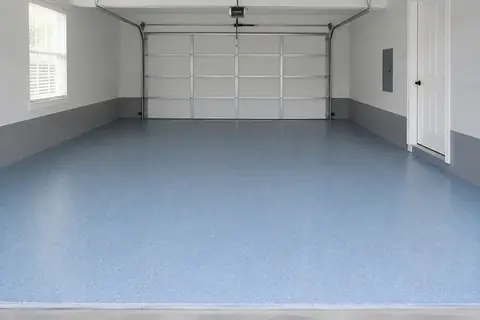
Bright color finish
Sky blue
A lighter, cleaner-looking solid field for a garage, hobby room or home gym, with texture selected around wet use and cleaning.
Request this direction →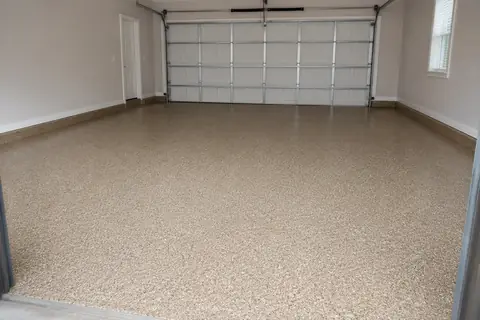
Mineral aggregate
Quartz broadcast
A dense small-grain broadcast with a different texture and visual scale than vinyl flake; approved products and topcoat build must be confirmed.
Request this direction →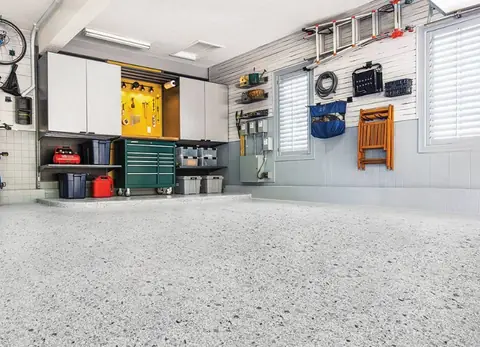
Lighter broadcast
Partial flake
A deliberate scattered-chip look that leaves more base color visible and requires consistent distribution from edge to edge.
Request this direction →Garage floor services in Melissa
Ten ways to complete, renew or repair the floor.
Search terms overlap, so every link explains a distinct appearance, chemistry or preparation scope rather than repeating one generic coating page.
Epoxy systems
Build, color and decorative versatility over properly prepared concrete.
Open service guide →Full-flake floors
Dense decorative chip coverage with selectable texture and topcoat.
Open service guide →Polyaspartic coatings
Fast-cure topcoat or full-system routes governed by exact product data.
Open service guide →Polyurea coatings
Product-specific fast-cure options without relying on a category label.
Open service guide →Metallic epoxy
Flowing pigments for a custom showpiece garage or finished flex room.
Open service guide →Quartz broadcast
A dense mineral aggregate field with controllable texture.
Open service guide →Solid-color floors
A clean uniform finish in neutral, bright or bold colors.
Open service guide →Removal and recoating
Remove loose or incompatible layers before rebuilding the floor.
Open service guide →Crack and pitting repair
Classify and prepare static cracks, pits and spalls without hiding movement.
Open service guide →New-home garage floors
Complete the empty garage before vehicles and storage move in.
Open service guide →Correct / incorrect
Preparation belongs in the visual story.
Coating over contamination or a weak old layer can make the new floor depend on a bad interface. Mechanical preparation and a compatible assembly create the controlled route.

What goes wrong
New resin follows the surface it is given
Rolling over contamination, smooth sealer or a failing old layer can leave the entire assembly dependent on a weak interface. The lower image shows the type of peeling that may follow—not a diagnosis of every failure.
Controlled route
Profile sound concrete, then install compatible layers
Mechanical preparation with dust extraction is followed by the product-specific repair, binder, broadcast and topcoat sequence. Joint decisions remain visible instead of being hidden by decoration.
AI-generated educational comparison. It explains workflow logic and is not represented as a completed company project or a universal specification.
Why this page is specific to Melissa
Melissa growth makes the pre-move-in garage floor decision especially useful.
Melissa's growth along US 75 and SH 121 has produced many garages that are visually new but not automatically ready for resin. Drywall compound, wall paint, tire products, construction dust and unknown curing materials can all affect preparation. The correct first question is what must be removed or verified—not which color can be rolled on fastest.
Homes reached from Melissa Road, Milrany Lane and the newer subdivisions north and east of the highway may have different concrete ages and builder practices from established streets closer to the original center. A city page cannot diagnose those differences, but it can ask for the concrete date, known sealer information and clear photographs before a quote is written.
Melissa owners often want the garage completed while it is still empty. That can simplify access, but cure and vehicle-return times still come from the named products and actual slab temperature. A short installation window should never be confused with immediate readiness for hot tires.
Practical Melissa advice: If the home is new, ask the builder about curing compounds or sealers and keep vehicles off the slab until the coating plan is confirmed.
Local reference points
Places that help describe access and housing context.
North Texas heat and hot tires
Heat changes application timing. It does not make every epoxy floor fail.
Surface and air temperature, humidity, dew point, rising or falling slab temperature, working time, complete cure and vehicle return must be checked against the named product. Some approved systems combine epoxy build with a more color-stable protective finish.
Hot-tire pickup is a real symptom, but the tire pattern alone does not identify the cause. Preparation, contamination, retained layers and early parking can all contribute.
Melissa installation route
Four checkpoints from photos to hand-off.
Review the garage
Address, access, current floor, use, finish preference and known history.
Inspect the slab
Removal, contamination, profile, defects, joints, moisture policy and edges.
Install the system
Named compatible layers controlled within working and recoat limits.
Hand the room back
Appearance, texture, foot and vehicle timing, cleaning and maintenance.
More floor problems
Recognize the symptom before choosing the repair.
Bubbles or Blisters
Raised bubbles can involve trapped air, concrete outgassing, moisture vapor, contamination or separation between coats. The pattern and failure plane should be examined before the blisters are opened or covered.
Open diagnosis →Hot-Tire Pickup
A tire-shaped failure is commonly called hot-tire pickup, but heat is only part of the evidence. Surface preparation, contamination, complete cure, retained old layers and the exact coating system can all affect the bond.
Open diagnosis →Yellowing or Fading
Door-side color change often points to UV exposure, but resin chemistry, pigment, clear-coat selection, heat and cleaning products can also affect appearance. Compare protected and exposed zones before choosing a remedy.
Open diagnosis →Slippery Garage Floor
Slip behavior depends on surface texture, topcoat, water, oil, tire products, dust and footwear—not gloss alone. The goal is to balance traction with a surface that can still be cleaned.
Open diagnosis →Oil Stains Before Coating
A surface can look clean while oil or silicone remains within the concrete. The coating plan should evaluate the depth and extent of contamination before deciding whether cleaning, removal or a no-install boundary is appropriate.
Open diagnosis →Dusty Unfinished Concrete
Bare concrete can release fine particles from ordinary wear or from a weak surface layer. Before coating, the surface strength, laitance, old curing materials and moisture condition should be evaluated.
Open diagnosis →Cracks, Pits or Spalls
Many static defects can be prepared and repaired, but moving joints, displaced cracks, heaving and unsound concrete need different treatment. Decorative resin does not make structural movement disappear.
Open diagnosis →Nearby service-area pages
Melissa is one address-verified route within DFW.
No separate city office is implied. Nearby service availability is checked with the actual address.
Melissa garage floor FAQ
Six local questions before the slab is coated.
Can a brand-new Melissa garage floor be coated?
Yes, when the actual concrete fits the selected system. New concrete may still have curing material, sealer, builder residue, a smooth finish or moisture conditions that require preparation and verification.
Which garage floor finish works well for Melissa daily parking?
Full-flake and quartz are useful comparisons for visual texture, while metallic and solid-color floors create a cleaner showpiece field. The complete system, traction and maintenance matter more than the finish name alone.
Does DFW heat rule out epoxy in Melissa?
No. Heat affects slab temperature, working time and cure planning, but it does not ban epoxy. The exact product limits, preparation, moisture, layer compatibility and full vehicle cure control suitability.
Can cracks or pits in a Melissa garage be repaired before coating?
Suitable static defects may have compatible repair options. Moving joints, displaced cracks, heaving or structural symptoms require a different boundary and may remain visible.
What if the old garage coating is peeling?
Identify the failure plane and test beyond the loose edge. A localized repair may fit sound surrounding coating; widespread weak bond can require broad removal.
What should I send for a Melissa garage floor estimate?
Send the address or ZIP, one wide garage photo, close-ups of cracks, joints, stains or old coating, approximate dimensions, intended use and the finish direction you prefer.
Slab-first estimate
Start the Melissa estimate with the garage you actually have.
Send the address or ZIP, wide and close floor photographs, approximate size, garage use and preferred finish—or call +1 (817) 660-7732.